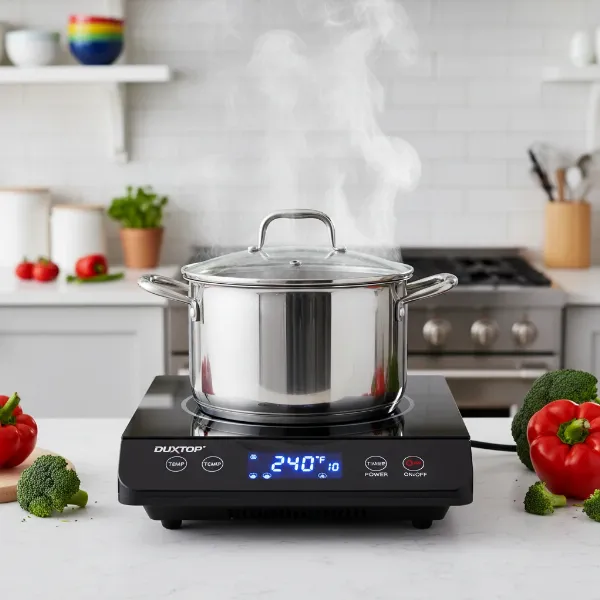
Induction cooktops offer incredible efficiency and precise control, revolutionizing modern kitchens. However, if you’ve recently upgraded or are considering it, you might discover that your cherished collection of aluminum, copper, glass, or ceramic cookware is suddenly incompatible. This common hurdle leaves many home cooks wondering how to bridge the gap between their beloved pots and their advanced induction hob. Fortunately, induction adapter plates provide a clever solution, allowing you to continue using your favorite non-magnetic cookware with your induction cooktop. This comprehensive guide will delve into everything you need to know about these practical kitchen accessories, helping you choose the best one for your culinary needs.
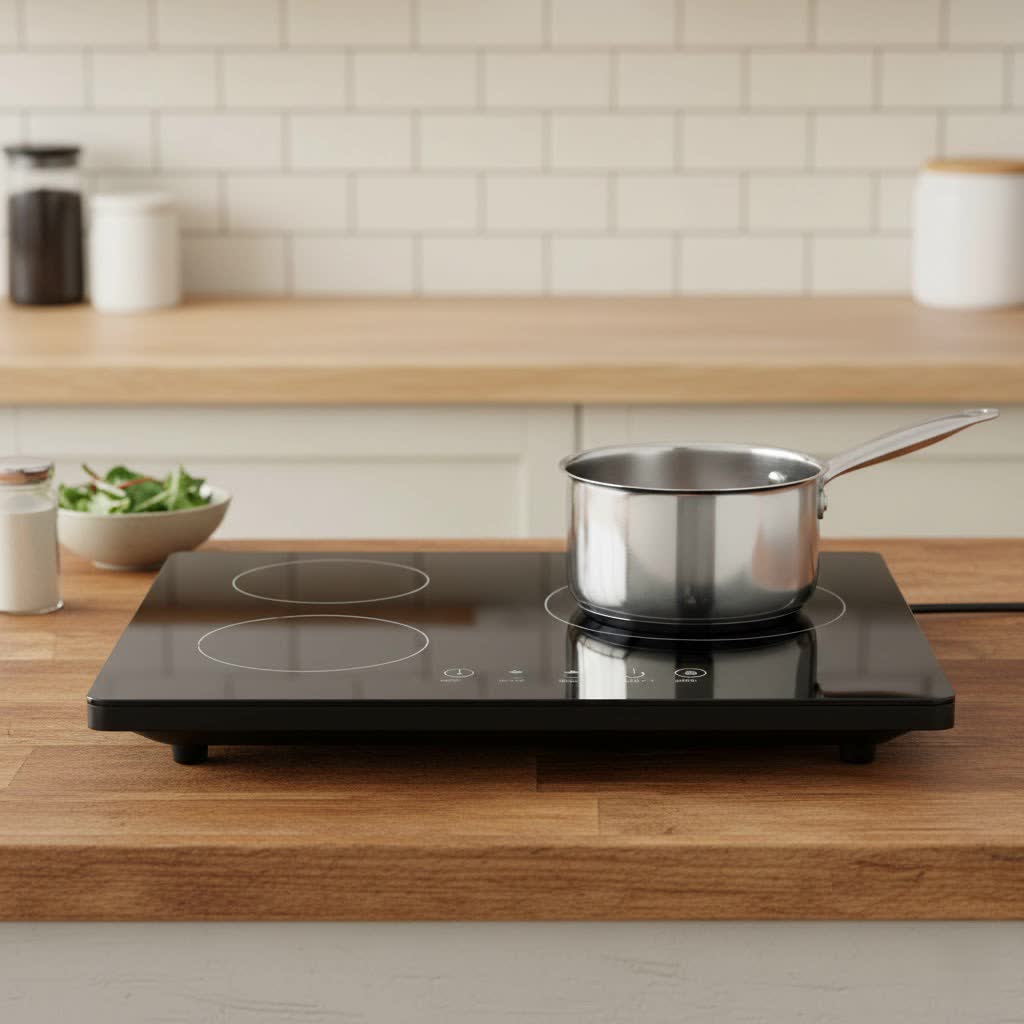
What is an Induction Cooktop?
An induction cooktop operates on a unique principle that sets it apart from traditional gas or electric stoves. Instead of generating heat directly through flames or radiant elements, it uses electromagnetic fields to excite the iron molecules in induction-compatible cookware. This process directly heats the pot or pan itself, rather than the cooktop surface, leading to faster cooking times and superior energy efficiency.
How Induction Cooktops Work
Table is empty.At the core of an induction cooktop’s operation are electromagnetic coils located beneath its ceramic glass surface. When the cooktop is turned on, these coils create a rapidly alternating magnetic field. For a pot to heat up, its base must contain ferromagnetic material, such as iron or magnetic stainless steel. This material interacts with the magnetic field, generating eddy currents and resistance, which instantly convert into heat within the cookware itself.
Structure of an Induction Cooktop
Induction cooktops typically feature a smooth, sleek ceramic glass surface that’s easy to clean. Beneath this surface lie the induction coils, electronic controls, and a cooling fan. Unlike electric resistance cooktops, the surface of an induction hob remains relatively cool to the touch, heating up only indirectly from the heat transferred back from the hot cookware. This design contributes to both safety and energy efficiency.
Advantages and Disadvantages of Induction Cooktops Compared to Other Types of Stoves
Induction cooktops boast several compelling advantages. They offer rapid heating, precise temperature control, and exceptional energy efficiency because heat is generated directly in the cookware. Their cool surface also reduces the risk of burns and makes cleaning spills easier. However, the main drawback is the strict requirement for induction-compatible cookware, which means pots and pans must have a magnetic base. Gas stoves offer visual flame control and work with any cookware, but are less efficient and release more residual heat. Electric resistance cooktops are affordable but slow to heat and cool, and less energy-efficient than induction.
Understanding Cookware Compatibility with Induction Cooktops
The fundamental requirement for cookware on an induction stove is a magnetic base. If a magnet sticks firmly to the bottom of your pot or pan, it’s induction-compatible. Many common materials like aluminum, copper, glass, and most ceramics lack this crucial ferromagnetic property, rendering them unusable directly on an induction cooktop. This is where induction adapter plates become invaluable, offering a way to harness the benefits of induction without replacing an entire collection of beloved cookware.
What are Induction Adapter Plates?
Induction adapter plates, also known as diffuser plates or converter discs, are essential accessories designed to make non-magnetic cookware work on induction cooktops. They act as an intermediary, effectively converting the induction hob’s electromagnetic energy into usable heat for your non-compatible pots and pans. This simple yet ingenious device prevents you from needing to discard functional cookware that doesn’t meet induction requirements.
How Induction Adapter Plates Work
An induction adapter plate consists of a magnetic metal disc, usually made of stainless steel, sometimes with a layered construction. When placed on an induction cooktop, this magnetic material absorbs the electromagnetic energy and rapidly heats up, just like an induction-compatible pan. You then place your non-magnetic pot or pan directly onto the hot adapter plate. The heat generated in the adapter plate is transferred to your cookware through conduction, allowing it to heat up and cook your food.
Benefits of Using an Induction Adapter Plate
The primary advantage of using an induction adapter plate is its ability to extend the life and utility of your existing non-induction cookware. This means you don’t have to invest in an entirely new set of pots and pans when transitioning to an induction cooktop, saving significant money. They also offer flexibility, allowing you to use specialty items like delicate glass teapots, small espresso makers, or antique copper pans that might not be available in induction-compatible versions.
Limitations and Considerations
While convenient, induction adapter plates do come with trade-offs. The heat transfer process is less direct, leading to reduced energy efficiency and slower heating times compared to using native induction-compatible cookware. This indirect transfer can also result in less precise temperature control, as the plate retains heat, making rapid temperature adjustments more challenging. Some experts even advise against their long-term use, citing potential inefficiency and a risk of overheating that could, in rare cases, damage the cooktop or the plate itself. Poor quality plates may also warp over time.
Comparing Popular Induction Adapter Plates on the Market
Choosing the right induction adapter plate involves considering various factors such as material, size, and handle design. Several brands offer reliable options, each with distinct features. High-quality plates typically feature a layered construction, often with an outer magnetic stainless steel layer and an aluminum core to enhance heat distribution.
| Brand/Model Example | Material | Diameter (Approx.) | Handle | Key Features | Price Range (USD) |
|---|---|---|---|---|---|
| Bialetti Adapter | Stainless Steel | 13-24 cm | Fixed/Detachable | Often octagonal, durable, good for moka pots | $20-40 |
| Max Burton 6010 | Stainless Steel | 8 inches (20 cm) | Heat-proof | High-quality construction, even heat distribution, comfortable grip | $30-50 |
| Flovia Cook by Nature | Stainless Steel | 24 cm | Detachable | Good for larger pots, focuses on even heating | $35-60 |
| Runzi Adapter | Stainless Steel/Tri-Ply | 20 cm | Detachable | Versatile, good heat diffusion, sturdy | $25-45 |
| Cuisinart (Generic) | Stainless Steel | Various | Fixed/None | Basic, functional, often single-layer | $15-30 |
Guide to Choosing the Right Induction Adapter Plate
Selecting the ideal induction adapter plate requires careful consideration of your specific cooking habits and cookware. A well-chosen adapter can significantly enhance your induction cooking experience, while a poorly matched one can lead to frustration and inefficient results. Focus on these key aspects to make an informed decision.
Determining Your Needs
Before purchasing, assess your typical cooking routine. Consider the size and material of the non-magnetic pots you intend to use with the adapter plate. If you primarily use small espresso makers or butter warmers, a compact adapter will suffice. For larger stew pots or frying pans, a wider plate with excellent heat distribution is essential. Think about how frequently you’ll rely on the adapter; occasional use might tolerate slightly less efficiency than daily cooking.
Selecting the Right Material and Construction
The material and construction quality are paramount for an adapter plate’s performance and durability. Look for plates made from high-grade stainless steel, which is robust and magnetic. The best plates often feature a “sandwich” or “tri-ply” construction, incorporating an aluminum core between two layers of stainless steel. This design enhances heat conductivity and ensures more even heat distribution across the plate’s surface, preventing hotspots and improving cooking consistency.
Considering Handle Design and Heat Distribution
A sturdy, heat-proof handle is a significant convenience and safety feature, allowing for easy placement and removal of the hot plate from the cooktop. Some handles are detachable for compact storage. Additionally, pay close attention to reviews regarding heat distribution. An adapter plate should distribute heat uniformly to your cookware, preventing uneven cooking or scorching. Models with a thicker core or specific internal heat-diffusing layers often perform better in this regard.
Checking Compatibility and Safety Features
Ensure the adapter plate is appropriately sized for both your induction cooktop zone and the non-magnetic pots you plan to use. A plate that is too small for the cooktop zone may not activate it efficiently, while a pot significantly smaller than the plate can cause the exposed plate area to overheat. Look for plates with a flat, stable surface to ensure good contact with both the cooktop and your cookware. Some plates include venting holes to manage heat, though their effectiveness varies. Always prioritize models from reputable brands known for quality and safety.
Top 3 Best Induction Adapter Plates Today
While experts often recommend using native induction-compatible cookware for optimal performance, quality induction adapter plates can be an excellent temporary solution or for beloved, irreplaceable pots. Here are three highly-regarded options that offer a good balance of performance and durability.
1. Bialetti Induction Adapter Plate
Description: The Bialetti Induction Adapter Plate is a popular choice, especially for those who own Bialetti moka pots or other small, non-magnetic utensils. It often features a distinctive octagonal design and is constructed entirely from stainless steel, known for its durability and heat retention.
Pros:
- Excellent for small-bottomed cookware, like moka pots.
- Durable stainless steel construction.
- Compact and easy to store.
Cons:
- Smaller sizes may limit use to specific cookware.
- Primarily designed for smaller vessels, less ideal for larger pots.
Specifications: Available in various diameters (e.g., 13 cm, 16 cm).
Price: Typically in the $20-$40 range.
Suitable for: Coffee enthusiasts and those with small, non-magnetic pots.
2. Max Burton 6010 Induction Disc
Description: The Max Burton 6010 is a well-known name in induction accessories, recognized for its robust construction. This disc is made from high-quality stainless steel and often features a comfortable, heat-proof handle for safe and easy handling. It’s designed for broader compatibility with various non-induction pots.
Pros:
- High-quality stainless steel ensures even heat distribution.
- Heat-proof handle for safe use.
- Good for a wider range of cookware sizes.
Cons:
- Can be slower to heat than direct induction cookware.
- May experience slight discoloration over time with heavy use.
Specifications: Approximately 8 inches (20 cm) in diameter.
Price: Usually found between $30-$50.
Suitable for: General home cooking with medium-sized non-magnetic pots and pans.
3. Runzi Induction Adapter Plate
Description: The Runzi Induction Adapter Plate is praised for its versatility and practical design. Often featuring a tri-ply construction with an aluminum core sandwiched between stainless steel layers, it aims for superior heat diffusion. It typically comes with a detachable handle for convenience.
Pros:
- Tri-ply construction for improved heat distribution.
- Detachable handle allows for easy storage and cleaning.
- Versatile for various non-magnetic cookware types.
Cons:
- Efficiency may still be lower than direct induction.
- Some users report a slight hum during operation.
Specifications: Commonly available in 20 cm and larger sizes.
Price: Generally ranges from $25-$45.
Suitable for: Cooks seeking enhanced heat diffusion and flexibility for different pot sizes.
How to Use and Maintain Your Induction Adapter Plate Correctly
Proper usage and maintenance are crucial for maximizing the performance and lifespan of your induction adapter plate, as well as ensuring safety in your kitchen. Following these guidelines will help you get the most out of this valuable accessory.
Steps for Using an Adapter Plate
- Place the Adapter Plate: Position the induction adapter plate centrally on the induction cooktop zone you intend to use. Ensure it lies flat and stable.
- Add Your Cookware: Place your non-magnetic pot or pan directly onto the adapter plate. Make sure the base of your cookware covers as much of the adapter plate’s surface as possible for efficient heat transfer.
- Activate Cooktop: Turn on your induction cooktop and set it to the desired heat level. The adapter plate will quickly heat up, then transfer that heat to your pot.
- Monitor Cooking: Be mindful that heating may be slightly slower than with induction-compatible cookware, and temperature adjustments might take a moment longer to register.
- Handle with Care: Always use oven mitts or the plate’s heat-proof handle when moving or removing a hot adapter plate.
Cleaning and Care Tips
After each use, allow the adapter plate to cool down completely before cleaning. Most stainless steel adapter plates are dishwasher safe, but hand washing with warm, soapy water and a non-abrasive sponge is recommended to preserve their finish and prevent potential mineral buildup. For stubborn stains, a mild stainless steel cleaner can be used. Avoid abrasive scrubbers or harsh chemicals that could scratch the surface. Ensure the plate is thoroughly dry before storing to prevent water spots or rust.
Safety Precautions
Never place an induction adapter plate on your cooktop and turn it on without a pot on top. This can cause the plate to overheat excessively, potentially damaging both the plate and the cooktop. Always ensure the pot’s base covers most of the adapter plate’s surface to prevent exposed areas from accumulating too much heat. The adapter plate will become very hot during use, so always use appropriate hand protection. If the plate shows signs of warping or significant damage, it’s best to replace it to maintain cooking efficiency and safety.
Tips for Handling Common Issues with Induction Adapter Plates
Even with a high-quality induction adapter plate, you might encounter some common issues. Knowing how to troubleshoot these problems can save you frustration and ensure a smoother cooking experience.
Plate Not Heating Effectively
If your adapter plate isn’t heating up properly, first ensure your induction cooktop is functioning correctly with induction-compatible cookware. Next, check that the adapter plate is centrally placed on the cooking zone and that your pot covers a sufficient portion of its surface. Some cooktops have minimum pan size requirements, so a very small adapter might not activate the zone. Ensure the plate itself is clean and free of debris that could hinder contact.
Overheating or Burning
Overheating usually occurs when the adapter plate is used without a pot, or if the pot is significantly smaller than the plate, leaving large sections of the plate exposed. This concentrated heat can cause the plate to scorch or, in extreme cases, potentially damage the cooktop. Always place a pot on the adapter before turning on the hob, and try to match the pot’s diameter to the plate’s as closely as possible. Reduce the heat setting if you notice excessive smoking or burning smells.
Discoloration or Warping
Discoloration, often a yellowish tint, is a common and generally harmless occurrence with stainless steel adapter plates due to prolonged exposure to high heat. While it doesn’t typically affect performance, it can be minimized by avoiding excessively high heat settings and allowing the plate to cool gradually. Warping, where the plate’s surface becomes uneven, is more problematic as it affects heat transfer and stability. This is often a sign of a lower-quality plate or severe overheating. If significant warping occurs, it’s best to replace the plate.
Induction Adapter Plate vs. Direct Induction Cookware
The decision to use an induction adapter plate or invest in direct induction-compatible cookware depends on your priorities and budget. Both options allow you to cook on an induction hob, but they differ significantly in performance, efficiency, and overall user experience. Understanding these differences is key to making the best choice for your kitchen.
| Feature | Induction Adapter Plate | Direct Induction Cookware |
|---|---|---|
| Principle | Plate heats electromagnetically, then transfers heat to pot by conduction (indirect). | Pot base heats electromagnetically and directly (direct). |
| Efficiency | Lower efficiency due to energy loss during two-step heat transfer. Slower heating. | Higher efficiency; direct heating means minimal energy loss. Rapid heating. |
| Temperature Control | Less precise and slower response to changes, as plate retains heat. | Highly precise and immediate response to temperature adjustments. |
| Cost | Affordable, saves cost of new cookware. | Higher initial investment, but a long-term benefit. |
| Safety | Plate gets very hot, risk of overheating if misused. Potential for cooktop damage (rare). | Cookware heats up, cooktop stays relatively cool. Safer with proper use. |
| Cookware Versatility | Allows use of non-magnetic pots (aluminum, copper, glass). | Requires specific ferromagnetic materials (cast iron, magnetic stainless steel). |
| Durability | Can warp or discolor over time, especially lower quality models. | Generally very durable, designed for induction use. |
> “While induction adapter plates offer a convenient bridge for non-magnetic pots, they introduce a layer of inefficiency. For the best cooking performance, energy savings, and most precise temperature control on an induction cooktop, investing in native induction-compatible cookware remains the gold standard.” – Chef Elena Rodriguez, Culinary Technology Specialist
Frequently Asked Questions When Using Induction Adapter Plates
Can I use any non-induction pot with an adapter plate?
Yes, induction adapter plates are designed to work with most non-magnetic cookware materials, including aluminum, copper, glass, and ceramic. The key is ensuring your pot’s base sits flat and covers a significant portion of the adapter plate for efficient heat transfer.
Do induction adapter plates damage induction cooktops?
When used correctly, adapter plates are generally safe. However, improper use, such as heating an empty plate or using a very small pot on a large plate, can cause the plate to overheat excessively, potentially leading to discoloration or damage to both the plate and, in rare instances, the cooktop itself.
How long does an induction adapter plate last?
The lifespan of an induction adapter plate varies depending on its quality and frequency of use. High-quality stainless steel plates with robust construction can last for several years with proper care, while cheaper models may show signs of warping or wear more quickly.
Are adapter plates energy efficient?
No, induction adapter plates are inherently less energy-efficient than direct induction-compatible cookware. The two-step heat transfer process (cooktop to plate, then plate to pot) results in some energy loss, meaning cooking times may be longer and more electricity consumed than with native induction pots.
Can I use an induction adapter plate on other types of stoves?
While primarily designed for Induction Cooktops, some adapter plates can also function as heat diffusers on gas or electric stoves. They can help distribute heat more evenly and protect delicate cookware from direct flame or harsh electric elements, though this is not their primary purpose.
How do I clean a discolored induction adapter plate?
Discoloration on stainless steel adapter plates is often a result of high heat and mineral deposits. It can typically be cleaned with a stainless steel cleaner or a paste of baking soda and water. For persistent discoloration, a vinegar soak followed by scrubbing may help, but some permanent tinting is normal over time.
Where to Buy Reliable Induction Adapter Plates?
When purchasing an induction adapter plate, it’s crucial to choose a reputable retailer and a brand known for quality. This ensures you receive a durable and efficient product that will safely serve your kitchen needs.
You can find reliable induction adapter plates at major electronics and home appliance superstores, both in-store and online. These retailers often carry a selection of trusted brands and provide product specifications. Specialty kitchenware stores are another excellent option, as their staff can offer expert advice and help you choose the best plate for your specific cookware. Additionally, large online marketplaces like Amazon, eBay, and dedicated kitchen supply websites offer a vast array of options, often with customer reviews that can guide your decision. Always compare prices and read product descriptions carefully to ensure you’re getting a genuine, high-quality adapter plate.
Conclusion
Induction adapter plates serve as a practical and cost-effective bridge, allowing your beloved non-magnetic pots and pans to thrive on the energy-efficient landscape of induction cooking. While they introduce an indirect heating method, potentially affecting speed and precision compared to native induction cookware, their ability to expand your culinary repertoire without a complete kitchen overhaul is undeniable. Choosing a high-quality plate with proper construction and a suitable size for your cookware ensures the best possible performance and longevity.
By understanding how these innovative tools work and carefully considering their benefits and limitations, you can make an informed decision for your kitchen. Will an induction adapter plate be the perfect solution to keep your favorite pots in rotation, or is it time to explore the world of induction-compatible cookware?