The modern kitchen marvel, an induction cooktop, brings speed, efficiency, and a sleek aesthetic to daily cooking. Its advanced technology heats cookware directly, saving energy and minimizing heat loss. However, few things are as frustrating as the dreaded “pan not detected” error, halting your culinary endeavors right in their tracks. This common issue often signals a simple fix, transforming a moment of confusion into a quick solution. Don’t let a blinking error message disrupt your meal preparation. Understanding the underlying causes and learning effective troubleshooting steps can empower you to resolve this problem swiftly, ensuring your induction cooktop remains the efficient workhorse of your kitchen.
Understanding Your Induction Cooktop: How It Works
Induction cooking stands apart from traditional gas or electric methods, relying on a fascinating scientific principle to heat your food. Instead of a flame or glowing coil, an induction cooktop utilizes electromagnetism. Beneath the smooth glass surface are copper coils that generate an oscillating magnetic field when electricity flows through them.
The Science Behind Induction Cooking
Table is empty.When compatible cookware is placed on an induction zone, the magnetic field penetrates the pan’s base. This interaction induces an electrical current within the cookware itself, generating resistance that rapidly converts electrical energy into heat. The pan heats up, while the cooktop surface remains relatively cool. This direct heating process is what makes induction cooking so fast and energy-efficient. It’s a marvel of modern engineering, transforming your kitchen into a more responsive and safer cooking environment.
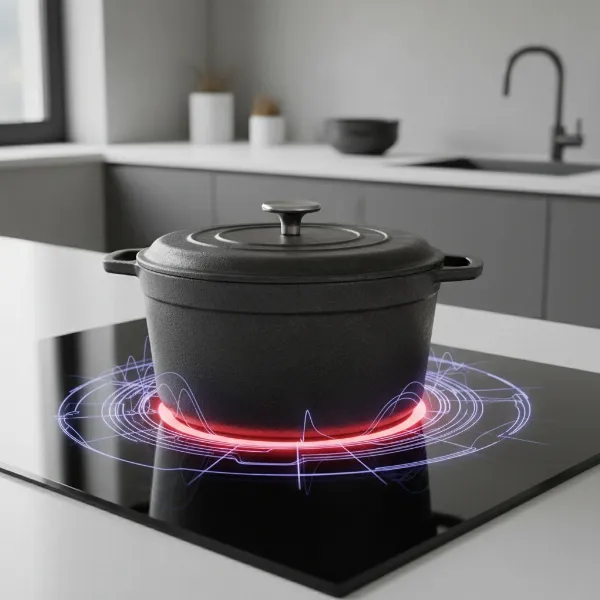 Close-up of an induction cooktop with a visible magnetic field transferring energy to a cooking pot, illustrating the core principle of induction cooking.
Why Cookware Compatibility Matters
The critical element for induction technology to work is the cookware. For the magnetic field to induce current and generate heat, your pots and pans must have a ferromagnetic base. This means they need to contain iron or another magnetic material. Materials like cast iron, magnetic stainless steel, and even some aluminum pans with an embedded magnetic layer will work. Conversely, cookware made purely of aluminum, copper, glass, or ceramic without a magnetic base will not be recognized by an induction cooktop, leading directly to the “pan not detected” error. This fundamental requirement is often the first and simplest explanation for troubleshooting issues.
Common Reasons Your Induction Cooktop Isn’t Detecting Pans
The “pan not detected” error can stem from various sources, ranging from user-related oversights to minor appliance quirks or even more significant internal issues. Identifying the specific cause is the first step toward finding a solution and getting back to cooking.
Incompatible Cookware: The Primary Culprit
As discussed, the most frequent reason for this error is using cookware that isn’t induction-compatible. Many home cooks transition to induction without realizing their existing pot and pan collection may not meet the magnetic requirements. If a magnet doesn’t firmly stick to the bottom of your pan, it won’t work on an induction cooktop. Even some stainless steel pans, depending on their alloy composition, may not be sufficiently magnetic.
Incorrect Pan Size or Placement
Induction cooking zones are designed to work optimally with a certain range of pan sizes. If your pan is too small for the specific cooking zone, the cooktop’s magnetic field might not be adequately activated, causing it to fail detection. Similarly, improper placement, such as the pan being significantly off-center or bridging multiple zones incorrectly, can interfere with the magnetic connection. Each cooking zone typically has a minimum diameter requirement, and disregarding this can trigger the error.
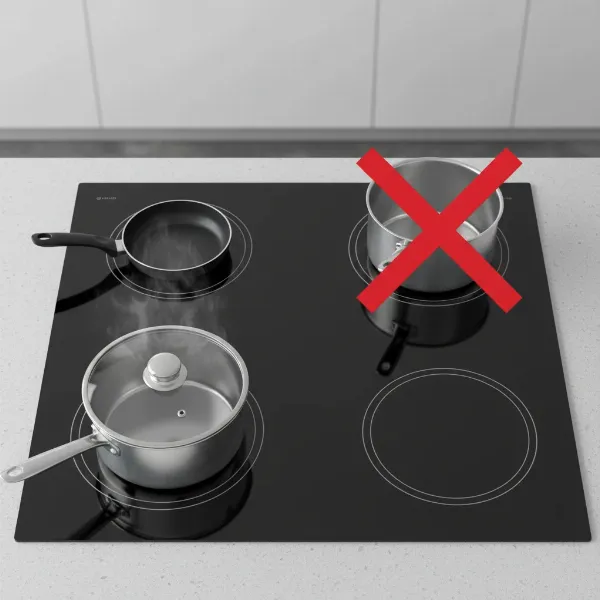 An induction cooktop illustrating correct and incorrect pan placement and size, highlighting how to avoid "pan not detected" errors.
Dirty or Damaged Pan Bases and Cooktop Surface
For efficient magnetic coupling, the contact between the pan’s base and the cooktop surface needs to be optimal. A warped pan base, caused by overheating or poor manufacturing, can create an uneven surface that prevents proper contact. Similarly, food debris, spills, or grease on either the cooktop surface or the pan’s bottom can act as an insulator, obstructing the magnetic field and leading to detection failure. A clean, flat surface is crucial for a seamless cooking experience.
Cooktop Malfunctions and Error Codes
While less common, internal technical issues can also trigger the “pan not detected” message. This could include a faulty pan sensor, a problem with the induction coil, or an issue with the control board. Sometimes, your cooktop might display a specific error code (like E0, E1, etc.) along with the pan detection error. These codes are valuable clues, pointing to particular internal issues that might require further investigation or professional assistance.
Power Issues and Resets
Just like any electronic appliance, an induction cooktop can sometimes benefit from a simple reset. Minor electrical glitches, momentary power fluctuations, or even internal software hiccups can temporarily confuse the cooktop’s sensors. A quick power cycle can often clear these temporary errors, allowing the system to recalibrate and detect your cookware correctly once more.
Step-by-Step Troubleshooting: Your Guide to Fixing the Error
When your induction cooktop displays the “pan not detected” error, a systematic approach to troubleshooting can help you pinpoint and resolve the issue quickly. Most problems can be fixed with a few simple checks.
Verifying Cookware Compatibility
The absolute first step is to confirm your pan is suitable for induction. Grab a basic kitchen magnet and hold it against the bottom of your pot or pan. If the magnet sticks firmly, your cookware is induction-compatible. If it barely sticks or falls off, then you’ve found your culprit—your pan simply isn’t designed for induction.
> “Often, the simplest solution is the correct one. Always check your cookware for magnetism first; it saves a lot of time troubleshooting other components.” – Sarah Chen, Culinary Appliance Specialist
Optimizing Pan Size and Placement
Ensure the pan you’re using is appropriately sized for the cooking zone. Most cooktops have markings indicating the effective area. If your pan is too small, try moving it to a smaller zone if available. Always center the pan directly over the marked cooking zone. An off-center pan, or one that’s too close to the edges, might not properly engage the magnetic field, even if it’s compatible. For large pans covering multiple zones, ensure they align with the cooktop’s bridging features if applicable.
Maintaining Cleanliness and Cookware Condition
Take a moment to inspect both the pan’s base and the cooktop surface. Ensure they are spotlessly clean and dry. Remove any food residue, grease, or spills. If your pan has a warped bottom, it might be time to replace it, as an uneven base will consistently struggle to make proper contact. A smooth, flat, and clean connection is vital for induction to work.
Performing a Cooktop Reset
If compatible cookware is correctly placed on a clean surface and the error persists, try resetting your cooktop. This can often resolve minor electronic glitches. Simply turn off the cooktop at the main power switch or unplug it from the wall socket for about 5-10 minutes. This “hard reset” allows the internal systems to fully power down and restart, potentially clearing any temporary faults. After the waiting period, plug it back in and try again.
Deciphering Error Codes and Settings
If your cooktop displays an error code, consult your appliance’s user manual. Each code typically corresponds to a specific issue, from overheating to internal sensor problems. The manual will provide precise troubleshooting steps for that particular code. Also, check if any lock settings, like a child lock, are accidentally activated, which could prevent pan detection or operation. Disabling these locks might resolve the issue.
When to Call a Professional: Identifying Serious Issues
While many “pan not detected” errors can be resolved with simple troubleshooting, there are instances when the problem points to a more complex internal issue. Knowing when to call a professional technician can save you further frustration and potential damage to your appliance.
Persistent Problems Despite Troubleshooting
If you’ve systematically gone through all the basic troubleshooting steps—checking cookware, ensuring proper placement, cleaning surfaces, and performing resets—and the error persists across multiple compatible pans and cooking zones, it’s a strong indicator of an underlying internal fault. At this point, attempting further DIY repairs without expertise can be risky.
Signs of Internal Component Failure
Specific symptoms often accompany serious internal malfunctions. These might include:
- The error appearing even with brand-new, confirmed induction-compatible cookware.
- Intermittent detection issues that seem random.
- Unusual noises or smells emanating from the cooktop.
- Error codes that the manual indicates require service.
- One or more specific cooking zones consistently failing to detect pans while others work fine, suggesting a faulty induction coil or sensor for that zone.
Understanding Repair Costs and Warranty
Before calling for service, check if your cooktop is still under warranty. Repairs under warranty can significantly reduce or eliminate costs. For out-of-warranty appliances, inquire about diagnostic fees and estimated repair costs upfront. A reputable technician will be able to diagnose the exact problem, explain the necessary repair, and provide a clear cost estimate. It’s often more cost-effective to repair a high-quality appliance than to replace it, provided the repair cost is reasonable.
Preventing “Pan Not Detected” Errors: Best Practices
Proactive measures can significantly reduce the likelihood of encountering the “pan not detected” error, ensuring a smooth and consistent cooking experience. A little attention to your cookware and cooktop can go a long way.
Choosing the Right Cookware
Invest in high-quality, induction-compatible cookware. Look for the induction symbol (a coil graphic) on the packaging or base of the pan. Always use the magnet test when purchasing new pots and pans. Prioritize cookware with flat, thick bases made from ferromagnetic materials like cast iron, magnetic stainless steel, or aluminum with a bonded steel plate. Good quality cookware not only ensures detection but also provides more even heating.
Proper Use and Care of Your Induction Cooktop
- Placement: Always center your pans on the cooking zones. If you have flexible zones, understand how they work with different pan sizes.
- Cleanliness: Regularly clean both the cooktop surface and the bottoms of your pans. Wipe away spills immediately to prevent stubborn residues from building up.
- Pan Condition: Replace warped or damaged pans. Even a slight deformation can impact conductivity.
- Manufacturer Guidelines: Always refer to your cooktop’s user manual for specific recommendations on pan sizes, cleaning, and error code interpretations. Adhering to these guidelines can prevent many common issues.
Induction Cooktops vs. Traditional Stoves: A Quick Comparison
Understanding the fundamental differences between induction and traditional cooking methods highlights why the “pan not detected” error is unique to induction and underscores its benefits.
Efficiency and Safety Advantages
Induction cooktops are incredibly energy-efficient because they heat the pan directly, losing very little heat to the surrounding air. This direct heat transfer means faster cooking times and a cooler kitchen. Safety is also a major plus; without an open flame or radiant heat, the risk of burns from the cooktop surface is significantly reduced, as it only heats up from residual warmth transferred from the pan. Traditional gas and electric stoves, while familiar, are less efficient and present higher surface temperatures.
Unique Considerations for Induction
The primary unique consideration for induction is, of course, cookware compatibility. This requirement, which leads to the “pan not detected” error, is absent in gas or traditional electric cooking, where virtually any heat-safe pan will work. Induction cooktops may also produce a slight buzzing or humming sound, particularly at higher power settings, which is simply the magnetic field at work and not a fault. These unique characteristics are trade-offs for the efficiency, speed, and safety that induction technology provides.
Frequently Asked Questions About Induction Cooktops
Got more questions about your induction cooktop? Here are some common queries that often arise.
Can I use an induction diffuser plate?
Yes, you can use an induction diffuser plate. These plates act as an intermediary, sitting between a non-induction pan and the induction cooktop. They contain ferromagnetic material that heats up and then transfers that heat to your non-induction pan. While they allow you to use incompatible cookware, they do reduce the efficiency of induction cooking.
What is the minimum pan size for induction?
The minimum pan size for an induction cooktop varies by model and specific cooking zone, but it typically ranges from 4.7 to 5.5 inches (12-14 cm) in diameter. Pans smaller than this might not activate the magnetic field sufficiently for detection. Always check your cooktop’s manual for precise specifications.
How do I know if my pan is induction-ready?
The easiest way to check if your pan is induction-ready is to use a simple magnet. If the magnet sticks firmly to the bottom of the pan, it has a ferromagnetic base and will work on an induction cooktop. You can also look for the induction coil symbol (a horizontal coil) embossed on the bottom of the pan or its packaging.
Conclusion
Encountering the “pan not detected” error on your induction cooktop can be a momentary nuisance, but as we’ve explored, it’s often a solvable puzzle. From ensuring your cookware is compatible and correctly placed to performing a simple cooktop reset, most issues can be resolved with a bit of methodical troubleshooting. Remember the power of a magnet, the importance of a clean surface, and the wisdom of your appliance’s manual. By understanding the causes and applying these practical solutions, you’re well-equipped to keep your induction cooktop running flawlessly, harnessing its efficiency and precision for countless meals to come.
What’s your go-to troubleshooting tip when your induction cooktop seems to be acting up?
Frequently Asked Questions
What does “Pan Not Detected” mean on an induction cooktop?
The “Pan Not Detected” message indicates that your induction cooktop cannot establish a magnetic connection with the cookware placed on its surface. This usually means the pan isn’t induction-compatible, is too small, improperly positioned, or there’s a minor fault preventing proper detection.
Can all stainless steel pans work on induction?
No, not all stainless steel pans are induction-compatible. While some stainless steel contains enough iron to be magnetic, others do not. Always perform the magnet test to confirm if your specific stainless steel cookware will work on an induction cooktop.
How often should I clean my induction cooktop?
You should wipe down your induction cooktop after every use to prevent food spills and grease from hardening. For a deeper clean, address any stubborn marks or residues regularly, perhaps weekly, to ensure optimal contact with pans and maintain its pristine appearance.
Is it normal for induction cooktops to hum?
Yes, it is normal for induction cooktops to produce a low humming or buzzing sound, especially at higher power settings or when using certain types of cookware. This sound is generally due to the vibration of the induction coils or the pan itself as it interacts with the magnetic field and is typically not a sign of a fault.
How do I test my cookware for induction compatibility?
To test for induction compatibility, simply place a common refrigerator magnet on the bottom of your pan. If the magnet sticks firmly and doesn’t fall off, the pan has a ferromagnetic base and is suitable for use on an Induction Cooktop. If it barely sticks or slides off, the pan is not compatible.