Simmering a delicate sauce to perfection on an induction cooktop can feel like a high-stakes balancing act. Known for their rapid heating and precise temperature control, induction hobs are a marvel of modern kitchen technology. Yet, this very power can turn your velvety béchamel into a scorched disaster or your rich marinara into a sticky mess if not handled with care. This guide will walk you through the essential techniques, smart tips, and critical cookware choices to ensure your sauces achieve that ideal, gentle simmer every time, without a hint of burning.
Understanding Induction Cooktops for Perfect Simmering
Induction cooking operates on a fundamentally different principle than gas or electric stovetops, offering both incredible advantages and a unique learning curve, especially when it comes to low-heat tasks like simmering.
How Induction Heat Works
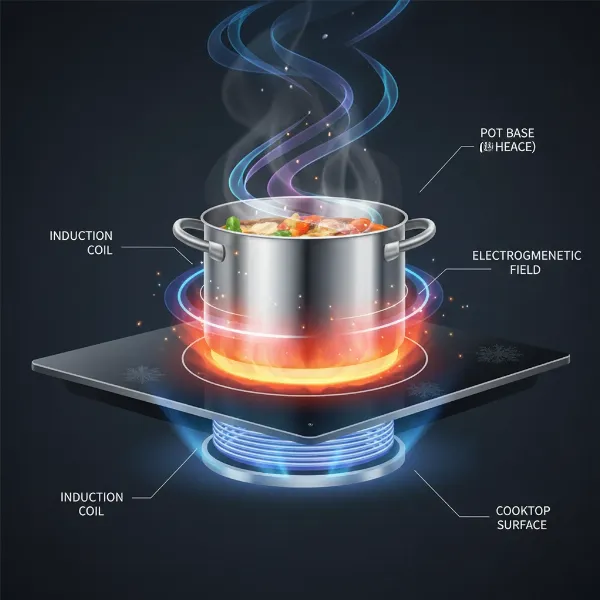
Table is empty.Unlike traditional cooktops that use radiant heat, induction hobs generate an electromagnetic field that directly heats the ferromagnetic material of your cookware. This means heat is produced within the pot or pan itself, rather than being transferred from a burner. The result is exceptionally fast heating, superior energy efficiency, and a cooktop surface that remains relatively cool to the touch. The precision of induction allows for instantaneous adjustments, similar to gas, but without the open flame.
The Precision and Power Challenge
The dual nature of induction—its remarkable precision coupled with its intense power—can be a double-edged sword for simmering. While the fine-tuned controls should theoretically make simmering easier, the rapid onset of heat can quickly push a sauce past a gentle simmer to a rolling boil, or worse, scorch it if the heat setting is too high or the pan is too thin. Learning to harness this power for subtle, consistent heat is key to preventing burning and achieving that coveted gentle bubble.
Essential Techniques for Perfect Simmering on Induction
Achieving a consistent, low simmer on an induction cooktop requires a mindful approach, focusing on control and observation.
Mastering Temperature Control
The most crucial step is to select the correct heat setting. Induction cooktops often have a wide range of power levels, from 1 to 10 or even higher. For simmering, always start with the lowest possible setting, or utilize a dedicated “simmer” or “keep warm” function if your hob has one. Aim for a barely bubbling surface, with only an occasional small bubble breaking. If your model uses power levels, begin at the second or third notch and make tiny, incremental adjustments. It’s often better to start too low and gradually increase the heat than to start too high and risk burning.
The Art of Stirring and Monitoring
Continuous stirring is your best defense against scorching, especially for thick or dairy-based sauces. This helps distribute heat evenly and prevents ingredients from sticking to the bottom of the pan, where direct induction heat is most concentrated. Use a wooden or heat-resistant silicone spoon to avoid scratching your cookware and to gently incorporate ingredients. Regularly scrape the bottom and sides of the pan to ensure no solids are settling and overheating.
Lid Management for Consistent Heat
The lid plays a significant role in temperature regulation. If your sauce is consistently approaching a boil despite a low heat setting, try simmering with the lid slightly ajar or completely off. This allows some steam and heat to escape, helping to maintain a gentler temperature. Conversely, for very slow, long simmers where minimal evaporation is desired, a well-fitting lid can help maintain warmth and consistency once the ideal simmer is established.
Strategic Heat Adjustment
Sometimes, even on the lowest setting, a sauce might get too hot. If you notice it’s bubbling too vigorously, remove the pot from the stovetop for a minute or two to allow the temperature to drop slightly, then return it to a lower setting. This technique, often referred to as “intermittent cooking,” can help regain control of an overheated sauce without turning off the hob entirely.
Choosing the Right Cookware for Delicate Sauces
The success of simmering on an induction cooktop heavily relies on the quality and type of cookware you use. Induction heating is direct, so the pan’s material and construction are paramount.
Ideal Materials
For simmering, opt for heavy-bottomed, induction-compatible pans. Materials like stainless steel with a magnetic base, enameled cast iron, and carbon steel are excellent choices. These materials not only respond well to the electromagnetic field but also distribute heat more evenly across the entire base, minimizing hot spots that can lead to burning. High-quality, multi-clad stainless steel often incorporates aluminum or copper cores between steel layers, enhancing heat conductivity and uniform heating.
Importance of Flat and Thick Bases
A pan with a flat, sturdy bottom is crucial for optimal induction performance. This ensures maximum contact with the cooktop surface, allowing for efficient heat transfer and consistent cooking. Thin or warped pans will heat unevenly and are much more prone to scorching your delicate sauces. Thicker construction in general provides more robust heat distribution.
Cookware to Avoid
Avoid very thin aluminum or lightweight steel pans, as these can scorch sauces rapidly due to poor heat diffusion and an inability to maintain stable low temperatures. While some aluminum pans might have an induction-compatible base, thin versions are generally not recommended for delicate simmering tasks. Glass and pure copper pans will not work on induction unless they have a magnetic bottom layer.
Common Simmering Mistakes on Induction and How to Avoid Them
Even experienced cooks can fall prey to common pitfalls when adapting to induction cooking, especially for simmering. Recognizing and avoiding these mistakes will save your sauces.
Overheating from the Start
A frequent error is starting with a heat setting that is too high. Induction hobs heat up incredibly quickly, so what might be a medium-low on a gas stove could be a rapid boil on induction. Always begin with a very low setting and increase gradually as needed, rather than the other way around. Never use the “boost” or “turbo” function for simmering; these are designed for rapid boiling, not gentle cooking.
Using Incompatible or Thin Cookware
As discussed, the wrong cookware is a recipe for disaster. Using pans that are too thin, warped, or not truly induction-compatible will lead to uneven heating and scorched patches. Always perform the magnet test if unsure: if a magnet sticks firmly to the bottom of your pan, it’s induction-ready.
Neglecting Continuous Stirring
Forgetting to stir, particularly with thick, starchy, or dairy-rich sauces, is a surefire way to end up with a burnt layer at the bottom of your pan. These sauces require constant attention to prevent sticking and to ensure even cooking. Even for thinner sauces, occasional stirring helps to distribute heat and flavors evenly.
Ignoring Your Cooktop’s Specific Features
Every induction cooktop model can have its own quirks. Some have dedicated simmer settings that maintain a precise low temperature, while others might cycle power on and off at lower settings, which can be tricky to manage. Take the time to read your appliance’s user manual to understand its specific heat levels and special functions. This knowledge is invaluable for mastering low-heat cooking.
Advanced Tips for Ultra-Low Simmering
For exceptionally delicate sauces or recipes requiring minimal heat, a few advanced techniques can provide extra control.
While induction cooktops offer precise control, some models might still struggle with maintaining an ultra-low, barely-there simmer. In such cases, a heat diffuser plate, placed between the cooktop and the pan, can help distribute heat even more gently, effectively buffering the direct induction power. While primarily used for non-induction cookware, these discs can also aid in smoothing out very low heat fluctuations on some induction hobs. Another simple trick is to periodically lift the pot off the burner for a few seconds if you notice it getting too hot, then return it.
Simmering Specific Sauce Types
Different sauces have varying needs when it comes to simmering, and induction cooktops can handle them all with the right approach.
- Delicate Butter Sauces (e.g., Hollandaise, Beurre Blanc): These sauces require extremely gentle heat, often below 160°F (71°C), to prevent splitting or curdling. Induction’s precise low-temperature control is excellent here. Use the absolute lowest setting and stir continuously. Some advanced induction models offer temperature settings down to specific degrees, which are ideal for these applications.
- Thick Tomato Sauces or Gravies: These are prone to sticking and burning due to their density and sugar content. Always use a heavy-bottomed pot and stir frequently, scraping the bottom to prevent solids from settling. A heat diffuser can be particularly helpful for long simmers to prevent localized scorching.
- Cream-Based Sauces: Similar to butter sauces, these require careful temperature management to avoid curdling or separating. Keep the heat very low and stir gently but consistently.
“The true magic of induction lies in its responsiveness. Once you learn to ‘feel’ its power, simmering becomes an exercise in finesse, not struggle.” – Chef Antoine Dubois, Culinary Instructor
Conclusion
Simmering sauces on an induction cooktop without burning is not just possible; it’s an art that can be mastered with practice and the right approach. By understanding how your induction hob works, choosing appropriate heavy-bottomed cookware, utilizing the lowest heat settings, and committing to regular stirring and monitoring, you can unlock the full potential of this advanced cooking technology. Embrace the precision, learn to tame the power, and you’ll consistently create beautifully simmered sauces that are rich, smooth, and free from any unwelcome scorched flavors.
What sauce will you perfect on your induction cooktop next?
Frequently Asked Questions
How do I know if my sauce is truly simmering and not boiling on induction?
A true simmer is characterized by small, gentle bubbles that occasionally break the surface, often only around the edges of the pan. A rolling boil, by contrast, features large, rapidly forming bubbles throughout the entire liquid. Aim for the “barely bubbling” stage to avoid burning and ensure even cooking.
Can I use a cast iron pan for simmering on an induction cooktop?
Yes, cast iron pans are excellent for simmering on induction cooktops because they are ferromagnetic and retain heat exceptionally well, helping to distribute it evenly. Enameled cast iron is often preferred as its smooth surface won’t scratch the cooktop. Ensure it has a flat bottom for best contact.
Why does my induction cooktop seem to cycle on and off at low settings?
Many induction cooktops regulate very low temperatures by cycling the power on and off rather than providing a continuous, extremely low output. This pulsing can sometimes make it harder to maintain a perfectly steady simmer. Using a heavy-bottomed pan can help buffer these fluctuations.
Should I cover my sauce when simmering on induction?
Whether to cover your sauce depends on the desired outcome. Covering the pot retains heat and moisture, which is good for developing flavors and reducing evaporation. However, if your sauce is getting too hot or approaching a boil, removing the lid or venting it slightly can help release excess heat and prevent scorching.
What are the dangers of leaving a sauce unattended on an induction cooktop?
Leaving a sauce unattended on an Induction Cooktop, especially at too high a setting, risks rapid overheating and burning, as induction heats very quickly. This can damage your cookware, create difficult-to-clean spills, and even pose a safety hazard due to extreme heat buildup if the pan dries out. Always monitor your simmering sauces.