Stepping into the world of modern kitchens, you’ll quickly encounter two powerful allies: the swift efficiency of an induction cooktop and the rapid cooking prowess of a pressure cooker. Combining these two can revolutionize your meal preparation, saving precious time and unlocking deeper flavors. However, successfully pairing a pressure cooker with an induction stove requires understanding a few key principles and techniques to ensure both safety and optimal results. This guide will walk you through everything you need to know, from checking compatibility to mastering heat settings, so you can confidently create delicious dishes in record time.
Understanding Induction Cooktops and Pressure Cookers
Before diving into the specifics of usage, let’s establish a foundational understanding of these two kitchen workhorses. Knowing how each operates will clarify why they are such a dynamic duo.
The Science Behind Induction Cooking
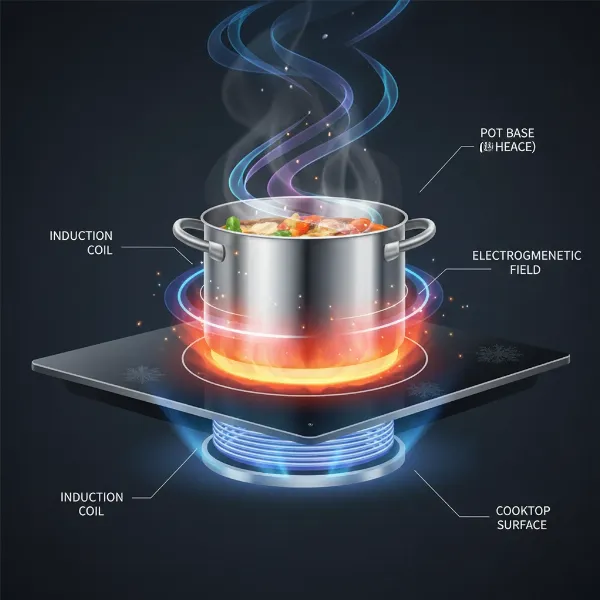
Table is empty.Induction cooktops utilize electromagnetism to generate heat directly within the cookware itself, rather than heating a burner element that then transfers heat to the pot. When you switch on an induction burner, an electromagnetic field is created. If an induction-compatible (magnetic) pot is placed on the surface, this field induces eddy currents in the pot’s base, which in turn produce heat. The cooktop surface itself remains relatively cool, making it highly energy-efficient and safer than traditional gas or electric coil stoves. This direct heating method means faster boil times and incredibly precise temperature control, allowing for nuanced adjustments during cooking.
How Pressure Cookers Transform Your Kitchen
A pressure cooker is a sealed pot that cooks food quickly by trapping steam, building up high pressure, and thus raising the boiling point of water inside. This elevated temperature and pressure significantly reduce cooking times for everything from tough cuts of meat to legumes and grains, making dishes like hearty stews or perfectly cooked rice achievable in a fraction of the usual time. Beyond speed, pressure cooking helps to lock in nutrients and moisture, often resulting in more flavorful and tender meals.
Why Induction and Pressure Cooking are a Perfect Match
The synergy between an induction cooktop and a pressure cooker is undeniable. Induction’s rapid heating capabilities mean your pressure cooker comes to pressure much faster, further accelerating the cooking process. The precise temperature control offered by induction allows you to easily maintain the exact heat level needed once pressure is achieved, preventing scorching and ensuring consistent cooking. Furthermore, induction cooktops often include built-in timers that can automatically shut off the heat, providing an extra layer of convenience and preventing overcooking, a particularly useful feature when working with pressure.
“The combination of induction’s speed and control with the pressure cooker’s efficiency is a game-changer for modern kitchens, drastically cutting down cooking times without compromising on flavor or nutrition.”
Ensuring Your Pressure Cooker is Induction-Compatible
The most critical step before you even begin cooking is to confirm that your pressure cooker is designed to work with an induction cooktop. Not all cookware is induction-compatible, and using the wrong pot can lead to frustration and a cooker that simply won’t heat up.
The Essential Magnet Test
The simplest and most reliable way to check for induction compatibility is the magnet test. Take a regular kitchen magnet and stick it to the bottom of your pressure cooker. If the magnet adheres firmly to the base, your pressure cooker is induction-compatible. If the magnet sticks weakly or doesn’t stick at all, it will not work on an induction stove. This is because induction technology relies on magnetic materials to generate heat.
Decoding Induction Compatibility Symbols
Many cookware manufacturers include symbols on the bottom of their pots and pans to indicate compatibility. Look for a coil symbol, often resembling a horizontal zigzag or a series of loops. Sometimes, the word “Induction” will also be explicitly printed. These symbols provide a clear indication that the cookware is ready for your induction cooktop.
Ideal Materials for Induction Pressure Cookers
For a pressure cooker to be induction-compatible, its base must contain ferromagnetic material. The most common and effective materials include:
- Magnetic Stainless Steel: Many modern stainless steel pressure cookers are designed with a magnetic base (often 430 stainless steel or ferritic steel), making them excellent for induction.
- Cast Iron: Cast iron is naturally magnetic and an excellent material for induction, though cast iron pressure cookers are less common.
- Aluminum with a Magnetic Base: Some aluminum pressure cookers come with a bonded stainless steel or cast iron base to make them induction-ready.
What to Avoid
Avoid pressure cookers made purely from non-magnetic materials like:
- Pure Aluminum: Unless it has a magnetic base, pure aluminum will not work on an induction cooktop.
- Certain Types of Stainless Steel: Some stainless steel alloys (like 304 stainless steel in a single layer) are not magnetic and thus incompatible. Always perform the magnet test to be sure.
Step-by-Step Guide: Using Your Pressure Cooker on an Induction Cooktop
Once you’ve confirmed compatibility, using your pressure cooker on an induction stove is a straightforward process, though it requires a slightly different approach than gas or traditional electric stoves.
Pre-Cooking Checklist: Prepare Your Ingredients and Cooker
Before placing your pressure cooker on the cooktop, ensure everything is ready. Add all your desired ingredients and the appropriate amount of liquid to the pressure cooker. Always adhere to the minimum and maximum fill lines indicated inside your cooker; typically, never fill more than two-thirds full (or half full for frothy foods like beans or grains). Double-check that the gasket is clean, properly seated, and free of any cracks or food debris, and that all valves (pressure regulator, safety valve) are clear and correctly positioned.
Optimal Placement for Even Heating
Position the pressure cooker centrally on the induction burner that most closely matches the size of its base. Using a burner significantly larger or smaller than the cooker’s base can lead to inefficient heating or inconsistent pressure build-up. Induction cooktops are highly efficient, and proper placement maximizes heat transfer.
Mastering Heat Settings: From High to Maintain Pressure
Using an induction cooktop with a pressure cooker involves a two-phase heat adjustment:
- Build Pressure: Start by setting your induction cooktop to a high heat level. Induction cooktops heat up very quickly, so your pressure cooker will reach pressure much faster than on other stove types. Keep a close eye on the pressure indicator (e.g., a rising pin, a jiggling weight, or the first whistle).
- Maintain Pressure: As soon as the pressure indicator signals that full pressure has been reached (or the cooker starts to whistle consistently), immediately reduce the heat to a medium-low or low setting. The goal is to maintain steady pressure, not to increase it further. Induction’s precise control makes finding this “sweet spot” easier, often a setting of 3-5 depending on your stove’s power levels and the cooker’s size. You might need some trial and error in the first few uses to determine the ideal maintenance setting for your specific cooker and cooktop.
Safe Pressure Release Methods
Once your cooking time is complete, you must release the pressure safely before opening the lid. There are typically two main methods:
- Natural Release: Simply turn off the induction cooktop and let the pressure cooker cool down naturally. The pressure will gradually dissipate on its own. This method is often recommended for foods that benefit from a longer cooking time or that might foam (like stews or beans) as it prevents sudden depressurization that could cause food to splatter or froth.
- Quick Release: For foods that cook quickly or when you need to stop the cooking process immediately, you can use the quick release method. This usually involves activating a steam release valve on your cooker, allowing steam to escape rapidly. Always direct the steam away from yourself and others, and use caution as the steam is very hot.
Advanced Tips for Efficient Induction Pressure Cooking
Leveraging the full potential of your induction cooktop can make pressure cooking even more convenient and effective.
Harnessing Your Cooktop’s Smart Features
Many induction cooktops come equipped with timers and pre-set functions. Utilize the built-in timer to automatically shut off the heat after your desired pressure cooking duration. This not only prevents overcooking but also allows for a natural pressure release if you’re not immediately available to tend to the cooker. Some advanced models might even have specific settings for pressure cooking, further simplifying the process.
Water Levels and Fill Lines: Precision is Key
While pressure cooking is forgiving in some aspects, precise water levels are crucial. Always refer to your pressure cooker’s manual for specific fill guidelines. A general rule is to ensure there is at least 1 cm of liquid covering the base to prevent dry heating and potential damage. Never exceed the maximum fill line, as this can be dangerous and lead to improper pressure buildup. For starchy foods like rice or potatoes, lightly oiling the base before cooking can help prevent sticking.
Adjusting Recipes and Cook Times
When adapting traditional recipes for induction pressure cooking, remember that induction’s speed means you might need to slightly reduce the initial high heat time before lowering it. Also, once pressure is reached and the heat is lowered, the cooking time itself is generally standard for pressure cooking. However, due to induction’s rapid response, you might find that achieving and maintaining pressure is more consistent, leading to more predictable results.
Common Challenges and Troubleshooting
Even with the right setup, you might encounter minor issues. Here’s how to address them.
When Your Cooker Won’t Heat: Compatibility Issues
If you place your pressure cooker on the induction cooktop and it simply doesn’t heat up, or your cooktop displays an error like “E0” or “U,” it almost invariably points to an incompatibility issue. Re-perform the magnet test. If the magnet doesn’t stick, your pressure cooker is not suitable for induction. In this case, you’ll need to purchase an induction-compatible model.
Decoding Induction Cooktop Error Codes
Beyond general incompatibility errors, your induction cooktop might display various error codes. Always consult your cooktop’s manual for specific meanings. Common errors related to cookware often signify improper pot detection (e.g., pot too small, not centered, or incompatible material). Adjusting the pot’s position or ensuring full contact with the burner can often resolve these.
Essential Maintenance for Longevity
To ensure both your pressure cooker and induction cooktop last, proper maintenance is key. After each use, allow the pressure cooker to cool, then clean it thoroughly. Pay special attention to cleaning the gasket and valves to prevent blockages that could affect pressure regulation. For the induction cooktop, wipe spills immediately with a soft cloth and appropriate cleaner to avoid stubborn stains or scratches. Never heat an empty cooker for more than 30 seconds on high heat, as this can potentially damage the base of the cooker or even the cooktop itself.
Pressure Cooking on Induction vs. Gas Stoves: A Quick Comparison
While both gas and induction cooktops can be used for pressure cooking, their characteristics offer distinct advantages.
| Feature | Induction Cooktop | Gas Stove |
|---|---|---|
| Efficiency | Highly efficient; direct heat transfer to pot | Less efficient; heat loss to surroundings |
| Heat Control | Precise, instant temperature adjustments | Good control, but slower response time |
| Speed | Extremely fast heating to reach pressure | Fast heating, but typically slower than induction |
| Safety | Cooktop surface remains cool; no open flame | Open flame; hotter ambient kitchen |
| Cleaning | Flat, smooth surface; easy to wipe clean | Grates and burners require more effort to clean |
| Cookware | Requires magnetic-bottom cookware | Works with almost all types of cookware |
Frequently Asked Questions About Induction Pressure Cooking
Can any pressure cooker be used on an induction stove?
No, only pressure cookers with a magnetic base are compatible with induction cooktops. Always perform the magnet test or look for an induction compatibility symbol on the cooker’s bottom to ensure it will work.
How do I know what heat setting to use on my induction stove for a pressure cooker?
Start with high heat to quickly build pressure. Once the cooker reaches full pressure (indicated by a whistle or rising pin), reduce the heat to a medium-low or low setting (typically 3-5 on a scale of 1-9) to maintain steady pressure. This often requires a little trial and error for your specific appliance.
Is pressure cooking on induction faster than on a gas stove?
Generally, yes. Induction Cooktops heat up much faster and more efficiently than gas stoves, which means your pressure cooker will reach its operating pressure more quickly, thus reducing overall cooking time.
What should I do if my induction cooktop shows an error when using a pressure cooker?
An error code often indicates an issue with cookware detection. First, ensure your pressure cooker is induction-compatible via the magnet test. Then, make sure it’s centered on the burner and fully covers the cooking zone. If the problem persists, consult your cooktop’s manual for specific error code meanings.
Can I use a diffuser plate with a non-induction pressure cooker on an induction stove?
Yes, an induction diffuser plate (also known as an induction adapter disc) can convert non-induction cookware to work on an induction stove. Place the diffuser plate on the induction burner, then place your non-induction pressure cooker on top of the plate.
Conclusion
Embracing the power of induction technology with the efficiency of a pressure cooker opens up a world of culinary possibilities, making complex meals simpler and everyday cooking quicker. By ensuring your pressure cooker is induction-compatible, understanding the nuances of heat management, and adhering to safety protocols, you’ll harness this formidable combination to consistently produce delicious, healthy dishes. From lightning-fast weeknight dinners to tender weekend feasts, your induction stove and pressure cooker are ready to transform your cooking experience. Are you ready to unlock their full potential and truly master your kitchen?